Work / Comparison

Edifier M60 vs Audioengine A2+ Gen 3: Which Compact Desktop Speaker Fits Your Setup?

Last updated: October 2026

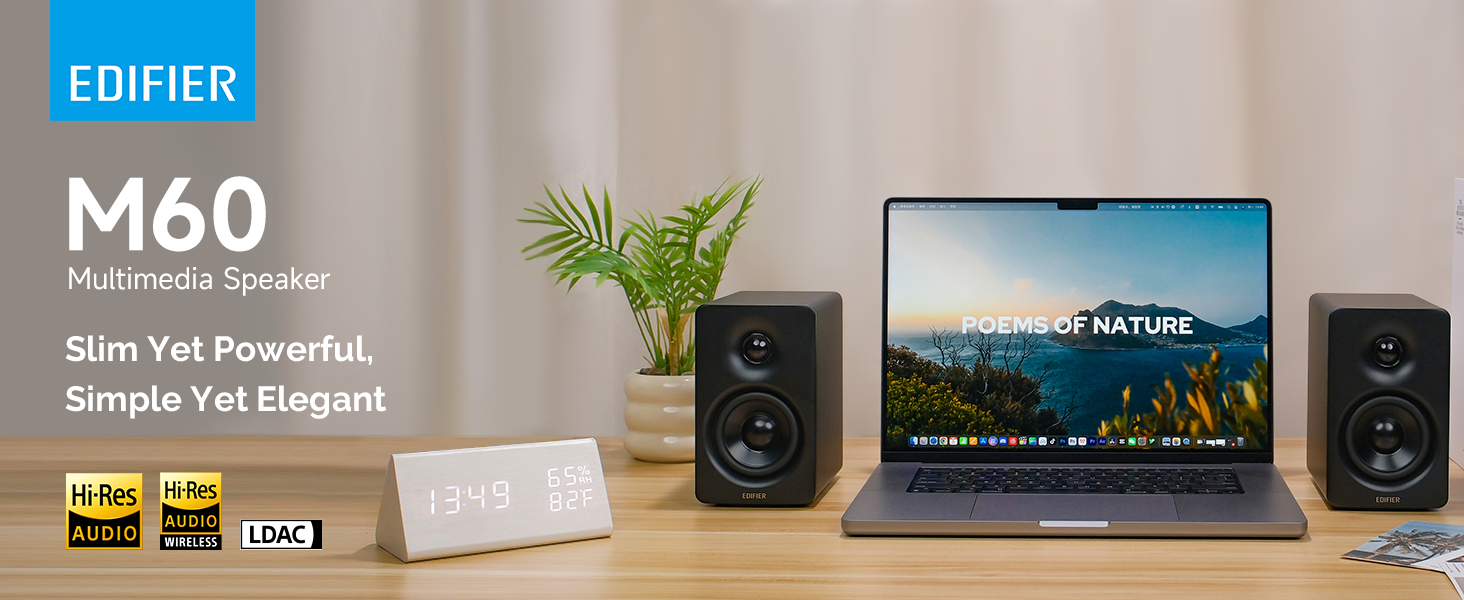
Edifier M60 compact desktop speakers beside a laptop
Edifier manufacturer product image. M60 desktop setup; not a Nolmira listening test.

The Edifier M60 and Audioengine A2+ Gen 3 are both compact powered stereo speakers, but they make different trade-offs.

01 / Comparison

Quick Answer

The Edifier M60 and Audioengine A2+ Gen 3 are both compact powered stereo speakers, but they make different trade-offs.

The M60 is the better fit if you want a feature-rich desktop setup for around $200. It combines 66W RMS total output, a two-way driver design, USB-C, Bluetooth 5.3 with LDAC, AUX, DSP, and included angled stands in a compact footprint.

The A2+ Gen 3 costs more at $299, but gives you something the M60 does not: RCA inputs and a variable RCA line-out for adding a subwoofer or integrating with a wider analog setup. It also supports aptX Adaptive, aptX HD, aptX, AAC, and SBC over Bluetooth.

So the choice is less about a universal sound-quality winner and more about how you plan to use the speakers:

  • Choose the Edifier M60 for a modern, compact computer desk, USB-C convenience, built-in DSP, and more features for less money.
  • Choose the Audioengine A2+ Gen 3 if RCA connectivity, analog flexibility, and a future subwoofer upgrade matter more.

Edifier M60: Check Price on Amazon

Audioengine A2+ Gen 3: Check Price on Amazon

02 / Comparison

Quick Comparison

Decision factorEdifier M60Audioengine A2+ Gen 3
Price at time of research$199.99$299
Speaker system2.0 stereo pair2.0 stereo pair
Rated power66W RMS total20W RMS/channel; 40W RMS total
Peak powerNot stated in the same way30W/channel; 60W total
Drivers3" aluminum mid-low + 1" silk tweeter2.75" aramid-fiber woofer + 0.75" silk tweeter
Frequency response58Hz–40kHz65Hz–22kHz ±2.0dB
Bluetooth5.35.3
Bluetooth codecsSBC, LDACaptX Adaptive, aptX HD, aptX, AAC, SBC
USBUSB-CUSB-C
Analog input3.5mm AUX3.5mm + RCA L/R
Subwoofer expansionNo dedicated subwoofer outputRCA variable line-out
DSPYesNot presented as a core feature
AppEDIFIER ConneXNo app required
Included stands15-degree aluminum standsNo desktop stands included
Size per speaker100 × 168 × 147mm6 × 4 × 5.25in
Best fitModern desktop / work setupDesktop + broader analog system

Scroll the table horizontally to compare both speakers.

Power figures are not directly comparable because the manufacturers use different measurement conventions. Prices are reference prices captured during research and can change.

03 / Comparison

Edifier M60: More Features for a Modern Desk

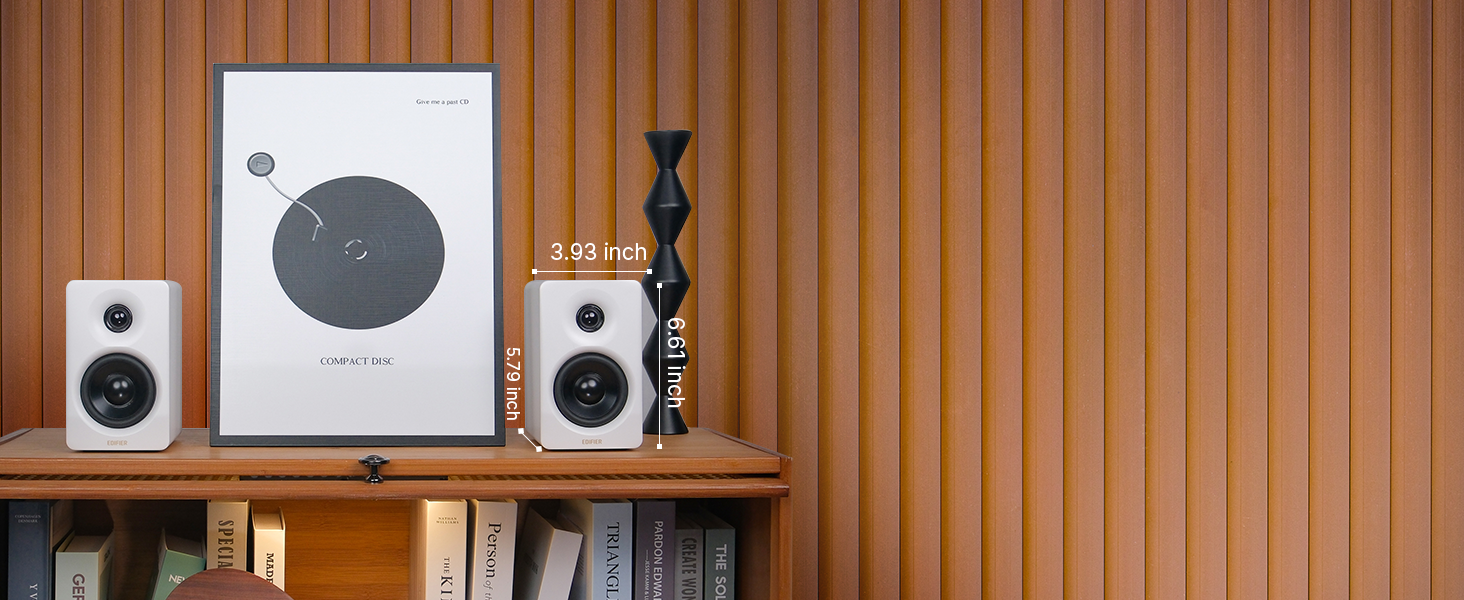
Edifier M60 compact speaker pair in a shelf setup

Manufacturer product image. Features shown are manufacturer information.

Edifier M60

Desktop fit

The Edifier M60 is built around a straightforward desktop use case: give a computer setup a meaningful audio upgrade without turning the desk into a larger speaker system.

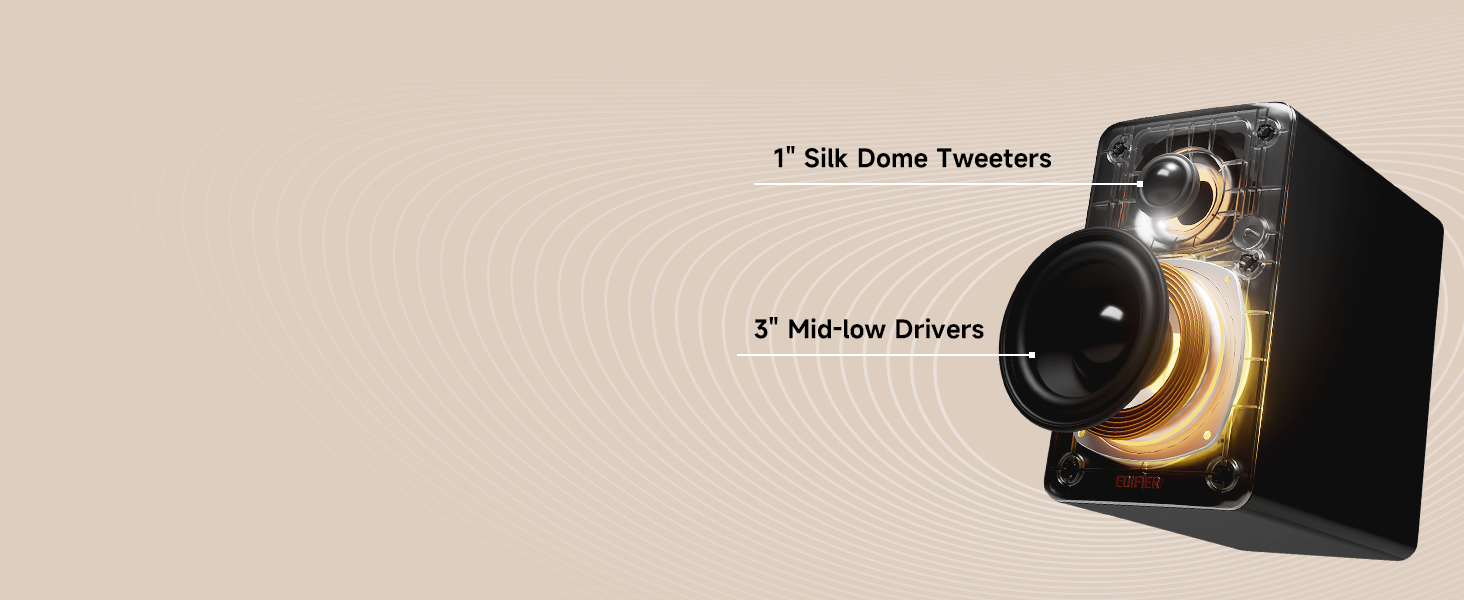
Each speaker has a 3-inch long-throw aluminum mid-low driver and a 1-inch silk-dome tweeter. Edifier rates the pair at 66W RMS total and uses DSP for a two-way active crossover and dynamic-range control.

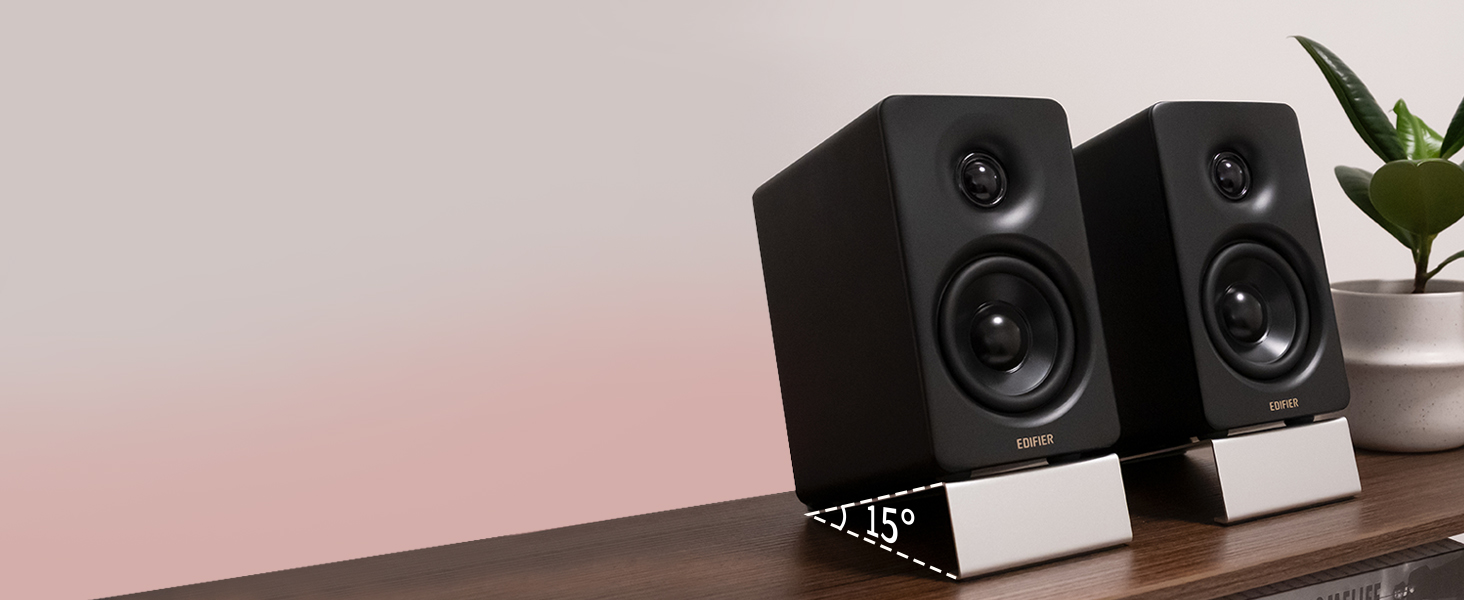
The physical footprint is also part of the product's proposition. Each speaker measures about 100 × 168 × 147mm, and the included aluminum stands angle the speakers upward by 15 degrees.

That combination is useful for a desk where space is already contested by a monitor, laptop, keyboard, dock, and other work equipment. The M60 gives you a conventional left-right stereo pair without requiring a separate subwoofer.

For a work-first setup, that can be more useful than simply maximizing bass.

Check Price on Amazon
USB-C, Bluetooth, and AUX cover most desktop setups

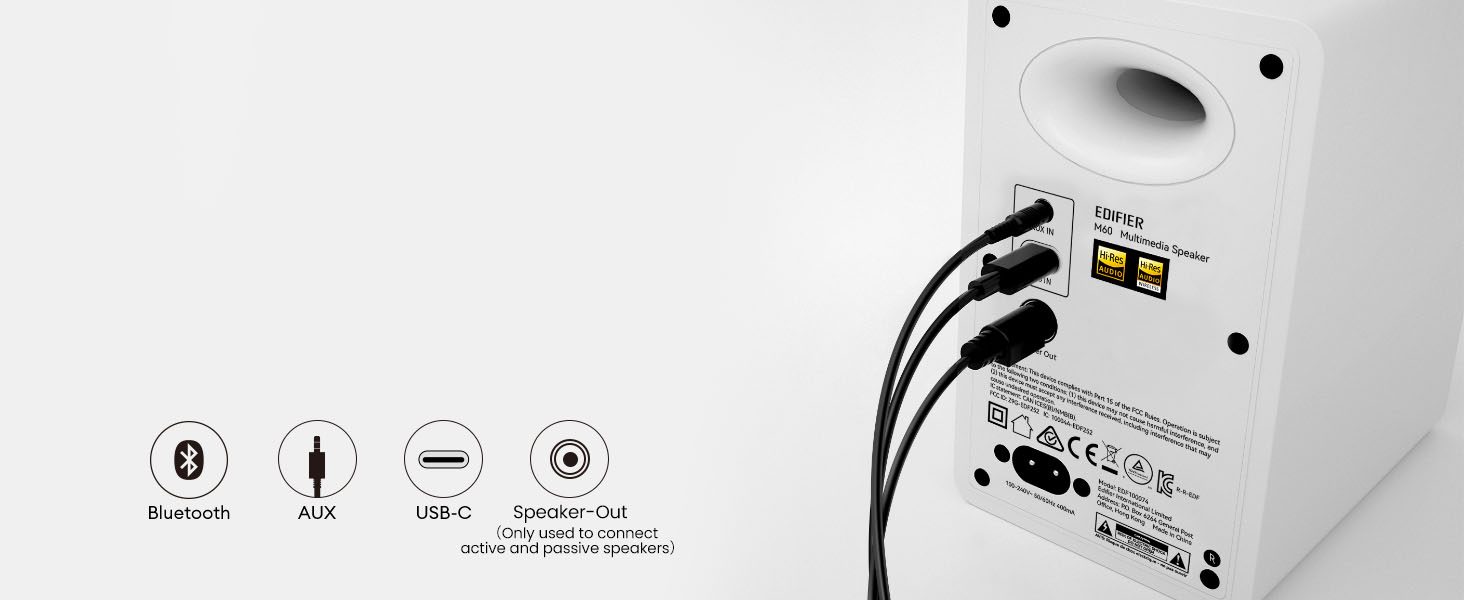
Edifier M60 rear USB-C and AUX inputs and speaker interconnect
Manufacturer image. Speaker-Out connects the active and passive speakers; it is not a subwoofer output.

The M60 has three main audio inputs:

  • USB-C
  • Bluetooth 5.3
  • 3.5mm AUX

USB-C is the most natural choice for a modern computer desk. Bluetooth makes it easier to play from a phone or tablet, while AUX remains useful for older computers and other analog sources.

The Bluetooth receiver supports SBC and LDAC. LDAC is only useful when the source device also supports it, so the specification should be treated as an option rather than a guarantee of higher-quality wireless playback from every device.

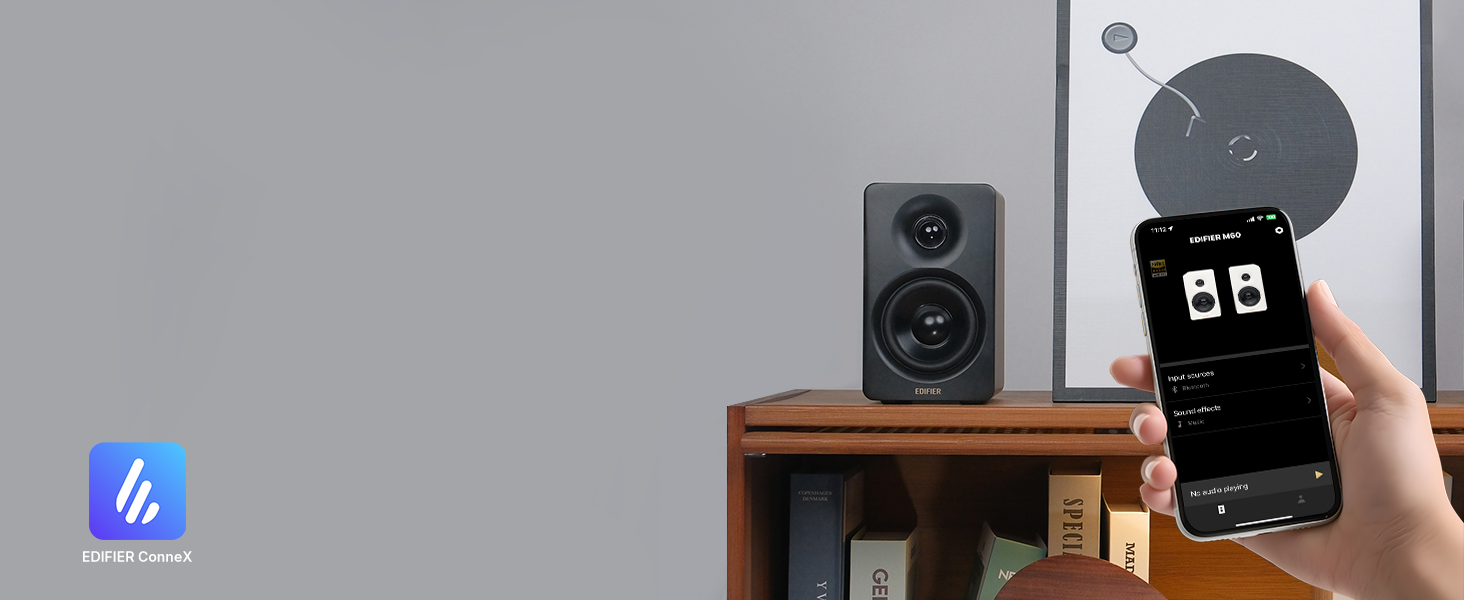
The M60 also works with the EDIFIER ConneX app for playback control, EQ customization, sound-effect settings, touch-panel controls, and firmware-related functions.

The main compromise: fewer traditional controls

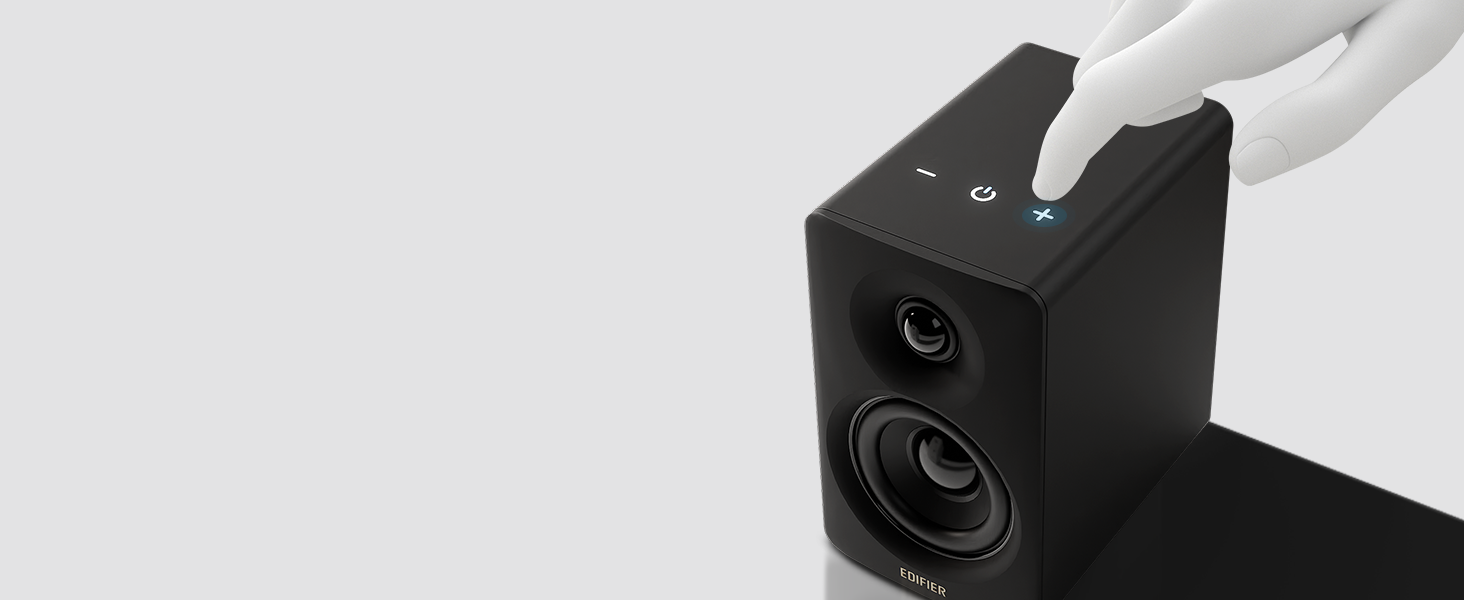
The M60 uses a capacitive touch panel on the top of the active speaker rather than a physical volume knob.

That keeps the design clean, but it is a meaningful usability trade-off. If you frequently adjust volume directly at the speaker, a physical knob can be easier to operate without looking.

If you normally control volume from your computer or phone, the issue matters much less.

04 / Comparison

Audioengine A2+ Gen 3: More Analog Flexibility

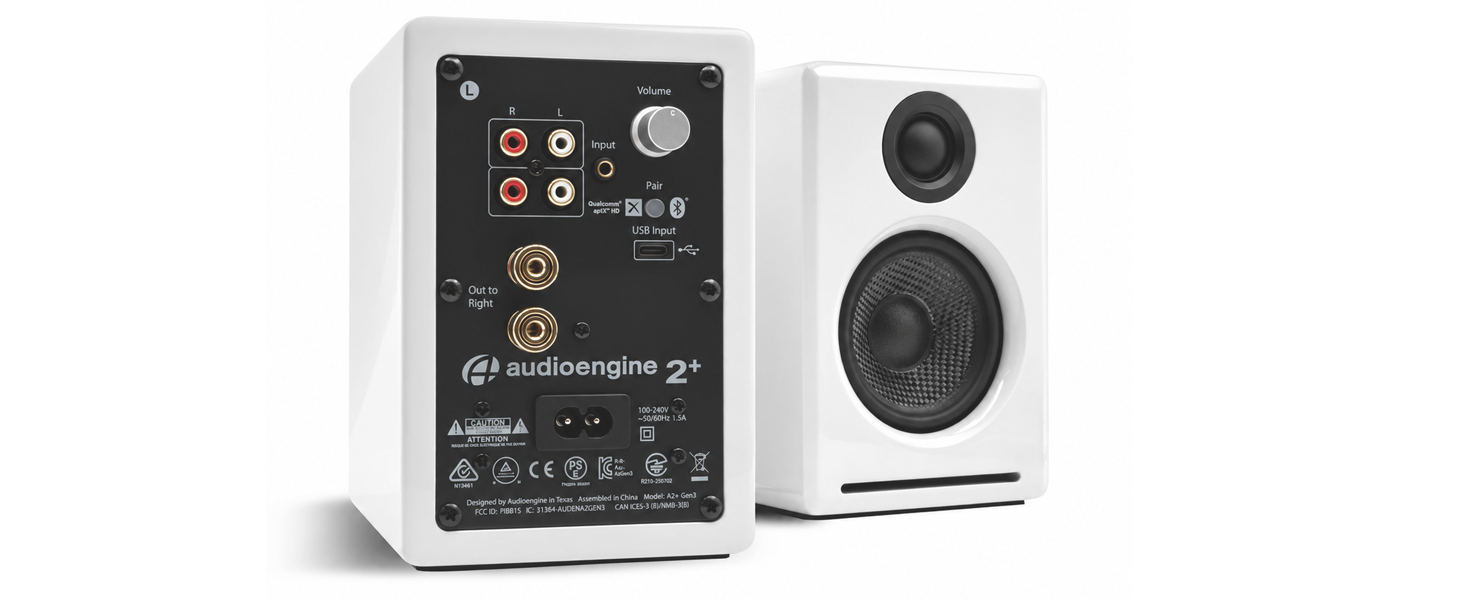
Audioengine A2+ Gen 3 speaker pair showing USB-C, RCA inputs and outputs

Manufacturer product image. Features shown are manufacturer information.

Audioengine A2+ Gen 3

Connection flexibility

The A2+ Gen 3 takes a different approach.

It is still a compact 2.0 desktop system, with a powered left speaker and passive right speaker, but its connectivity is broader. Audioengine lists:

Check Price on Amazon
  • USB-C
  • 3.5mm stereo mini-jack
  • RCA L/R input
  • Bluetooth 5.3
  • RCA variable line-out

That last connection is the biggest functional difference in this comparison.

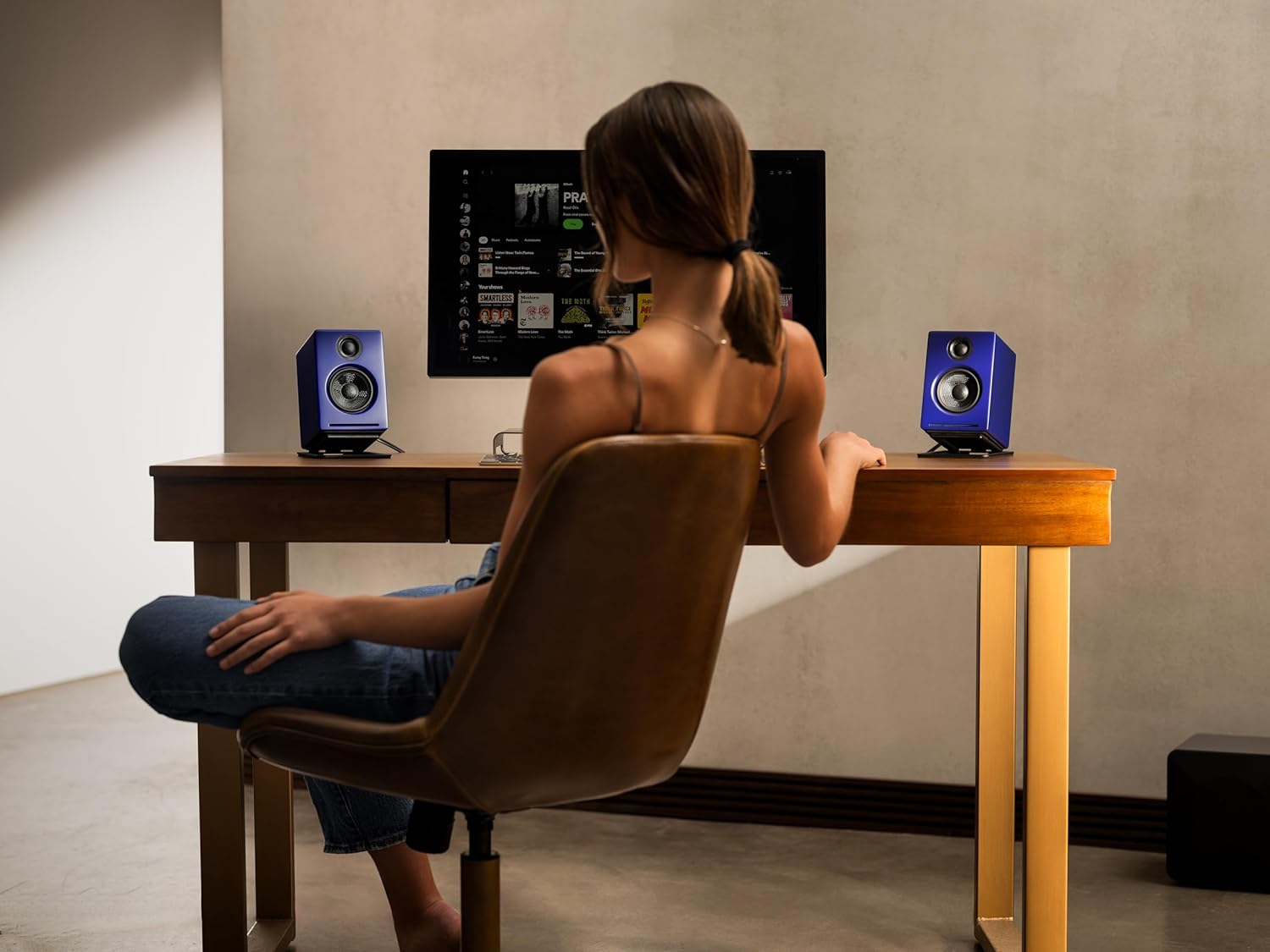
The variable RCA line-out gives the A2+ Gen 3 a clear upgrade path for a subwoofer. If you know you eventually want deeper low-frequency output, the A2+ is easier to build into a larger system.

The M60 does not offer a dedicated subwoofer output, so adding a subwoofer is not part of its intended expansion path.

aptX Adaptive is useful, but it is not the whole decision

The A2+ Gen 3 supports aptX Adaptive, aptX HD, aptX, AAC, and SBC over Bluetooth.

That is a broader codec list than the M60's SBC/LDAC support, but codec support alone does not determine overall sound quality. The source device, connection conditions, speaker tuning, and listening environment all matter.

For most buyers, the more practical difference is simply this:

M60: modern USB-C desktop setup plus LDAC.

A2+ Gen 3: USB-C plus a wider analog connection set and more Bluetooth codec options.

05 / Comparison

Sound: What the Specifications Tell You—and What They Don't

This is the part where a specification table can become misleading.

The M60 is rated at 66W RMS total, while Audioengine lists the A2+ Gen 3 at 20W RMS per channel, with 30W peak per channel and 60W peak total.

Those figures should not be treated as a direct loudness ranking because the manufacturers are using different power-reporting conventions.

The driver designs are also different. The M60 uses larger 3-inch aluminum mid-low drivers, while the A2+ Gen 3 uses 2.75-inch aramid-fiber woofers.

Edifier M60 manufacturer diagram of its 3-inch mid-low driver and 1-inch tweeter
Edifier driver illustration; not independent measurement data.

On paper, the M60 reaches lower according to its published frequency-response specification: 58Hz–40kHz versus 65Hz–22kHz ±2.0dB for the A2+ Gen 3.

But published frequency ranges do not tell you everything about how a speaker sounds in a room. They do not replace independent measurements, listening tests, or an understanding of how the speakers are positioned.

Edifier manufacturer illustration of digital audio processing
Edifier processing illustration. Processing specifications do not establish a comparative sound-quality winner.

06 / Comparison

Bass and Subwoofer Expansion: The A2+ Has the Clearer Upgrade Path

Neither speaker should be treated as a substitute for a large speaker or dedicated subwoofer if deep bass is the main priority.

The M60 can provide useful low-end weight for a compact desktop system, but its small cabinet and 3-inch mid-low driver still impose physical limits. More importantly, there is no dedicated subwoofer output.

The A2+ Gen 3 has the more flexible long-term path because of its variable RCA line-out.

That does not automatically make it the better speaker. It means the A2+ is the more logical choice if you are already thinking about a 2.1 setup.

Choose M60 when:

  • You want a self-contained 2.0 desktop system.
  • You do not want another box under the desk.
  • Compactness matters more than future expansion.
  • You mainly listen at a desk.

Choose A2+ Gen 3 when:

  • You may add a subwoofer later.
  • You want RCA input/output.
  • You have analog audio equipment to connect.
  • You want the speaker system to grow with your setup.
Supplied Audioengine desktop setup photograph with separate subwoofer
Audioengine setup photograph showing a separate subwoofer as an expansion example; not a Nolmira test or a statement of included accessories.

07 / Comparison

Desk Space and Placement

Edifier M60 speakers on supplied 15-degree aluminum stands
Edifier product image illustrating the included 15-degree stands.

Both systems are small, but the M60 has a particularly clear desk-oriented advantage: the included stands are part of the package.

Edifier's stands angle the speakers by 15 degrees and raise the drivers toward the listener. That makes sense for near-field listening because desktop speakers are often positioned below ear level.

The A2+ Gen 3 speakers are also compact. Each measures 6 × 4 × 5.25 inches, so they can fit beside a monitor without demanding bookshelf-speaker levels of space.

The difference is not that one is "small" and the other is "large."

The more useful distinction is:

M60 arrives as a more complete desk-focused package. A2+ Gen 3 gives you a compact speaker platform with more analog expansion options.

If you want to keep the setup simple, the M60 has the cleaner proposition.

08 / Comparison

Controls and Everyday Use

The M60 and A2+ Gen 3 also differ in how much control hardware they put in front of you.

The M60 uses its top touch panel and the connected source device, with additional controls available through the EDIFIER ConneX app.

The A2+ Gen 3 takes the opposite approach: it does not require an app. Audioengine positions the system around straightforward physical connections and source-device control.

This creates two different kinds of simplicity.

M60 simplicity: modern inputs, compact design, touch controls, optional app features.

A2+ simplicity: fewer software dependencies, conventional analog connections, and no required app.

Neither approach is universally better. It depends on whether you prefer software-assisted control or a more traditional speaker system.

Edifier M60 top capacitive touch controls
Edifier manufacturer image of the touch panel.
EDIFIER ConneX app shown beside an M60 speaker
Edifier manufacturer app illustration; not a screenshot of Nolmira testing.

09 / Comparison

Price: Is the A2+ Gen 3 Worth the Extra $99?

At the time of this comparison, Edifier lists the M60 at $199.99, while Audioengine lists the A2+ Gen 3 at $299.

That is a meaningful gap.

The A2+ Gen 3 therefore needs to justify roughly $100 more through the features that are actually relevant to you.

If your setup is simply:

Laptop/desktop → USB-C → speakers

the M60 is difficult to ignore. You get a compact stereo pair, 66W RMS total rated output, DSP, LDAC, included stands, and a lower price.

If your setup is more like:

Computer + analog source + future subwoofer

the A2+ Gen 3 becomes more compelling because its RCA inputs and variable line-out solve problems the M60 does not address.

The extra money is therefore less about "better specifications" and more about different connectivity and expansion priorities.

10 / Comparison

What the Owner Feedback Adds

The supplied Amazon material for the A2+ listing showed 4.4 out of 5 stars from 3,102 global ratings at the time it was captured.

The review themes were mixed in a useful way.

Positive feedback frequently mentioned:

  • sound quality
  • compact size
  • appearance and build
  • ease of setup

Lower-rated reviews raised concerns including:

  • Bluetooth connection or recognition problems
  • USB connection issues
  • occasional noise
  • durability or early hardware problems
  • dissatisfaction with the price relative to the sound

Those reports should not be treated as proof that the A2+ Gen 3 is unreliable. They are better understood as owner-level risk signals. Customer reviews are useful for identifying recurring complaints, but they are not controlled product testing.

The existing M60 research shows a similar pattern: broadly positive feedback around sound and design, alongside some complaints about connection behavior, source switching, and the lack of a physical volume knob.

For both products, the right question is therefore not "Does anyone have problems?" but "Are the reported trade-offs relevant to my setup?"

11 / Comparison

Which One Should You Buy?

Choose the Edifier M60 if you want:

  • a modern computer-desk speaker
  • lower upfront cost
  • USB-C as a primary connection
  • Bluetooth with LDAC
  • built-in DSP
  • included angled stands
  • a compact, self-contained 2.0 setup
  • a cleaner work-focused desk

Best fit: people who want a meaningful step up from laptop or monitor audio without adding a subwoofer or a more complicated connection system.

Check Price on Amazon

Choose the Audioengine A2+ Gen 3 if you want:

  • RCA inputs
  • a variable RCA line-out
  • a clearer subwoofer upgrade path
  • broader Bluetooth codec support
  • a conventional app-free setup
  • a compact system that can become part of a larger analog audio setup

Best fit: buyers who care about connection flexibility or already expect to expand their desktop audio system.

Check Price on Amazon

12 / Comparison

Final Decision

For most modern work desks, the Edifier M60 is the more proportionate choice.

It costs less, takes up little space, includes angled stands, supports USB-C and Bluetooth 5.3 with LDAC, and adds DSP and app-based controls without requiring a separate subwoofer or amplifier.

The Audioengine A2+ Gen 3 makes more sense when your needs are broader than a straightforward computer setup. Its RCA inputs and variable RCA line-out make it easier to integrate analog sources and add a subwoofer later, while aptX Adaptive and other Bluetooth codecs broaden its wireless compatibility.

So this is not a case where the $299 speaker simply "beats" the $199.99 speaker.

Choose the M60 when your priority is getting more desktop-focused features for less. Choose the A2+ Gen 3 when connectivity and future expansion matter enough to justify the higher price.

For Nolmira's Work use case, the Edifier M60 is the stronger fit.

Check Price on Amazon

13 / Comparison

How We Compared Them

Nolmira did not personally bench-test the Edifier M60 and Audioengine A2+ Gen 3 side by side.

This comparison combines:

  • manufacturer specifications and product documentation
  • the existing Nolmira Edifier M60 research
  • the supplied Amazon listing and customer-review material for the Audioengine A2+ Gen 3
  • product-level feature and connectivity analysis
  • recurring owner-feedback themes

We separate manufacturer specifications, customer feedback, and editorial inference rather than treating any one source as definitive.

Where the two manufacturers use different measurement conventions, we avoid turning the numbers into a false direct ranking.

TOP