Choose it if
- You regularly charge a USB-C laptop away from outlets.
- Your laptop can benefit from higher USB-C wattage.
- You value a detailed smart display.
- You travel with a laptop and several electronics.
- You care more about output than low weight.
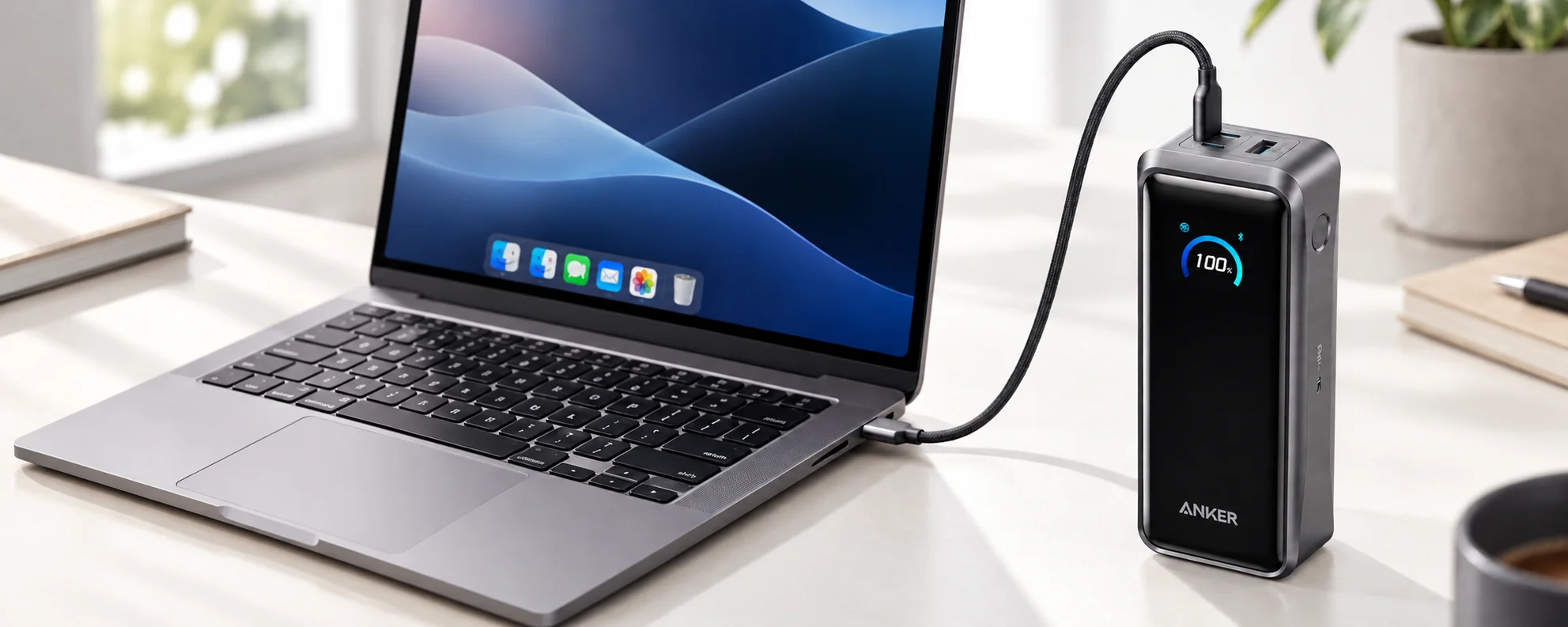
Travel & Work Gear / Product review
A high-output travel power bank with a genuinely useful display — but it is heavy, expensive, and not the simplest choice for everyone.
01 / Quick answer
If you want a high-output USB-C power bank for a laptop, the Anker 737 Power Bank (PowerCore 24K) is one of the more serious options in this category. It combines 24,000mAh capacity, up to 140W total output, two USB-C ports, one USB-A port, and a smart display that shows more charging information than a basic battery meter.
Its strengths are clear: it is genuinely relevant to laptop charging, it can deliver up to 140W through a compatible USB-C setup, and the display makes charging behavior easier to understand.
Its trade-offs are equally clear. It weighs about 1.3 pounds, costs much more than simpler 65W and 100W power banks, and the low-star owner-review pool includes recurring reports of premature failure, battery degradation, and charging-management glitches.
Good fit for: high-power USB-C laptops, work travel, remote work, and users who value charging data.
Less suitable for: phone-only charging, lightweight everyday carry, or buyers who do not need more than 65W–100W.
02 / Product details
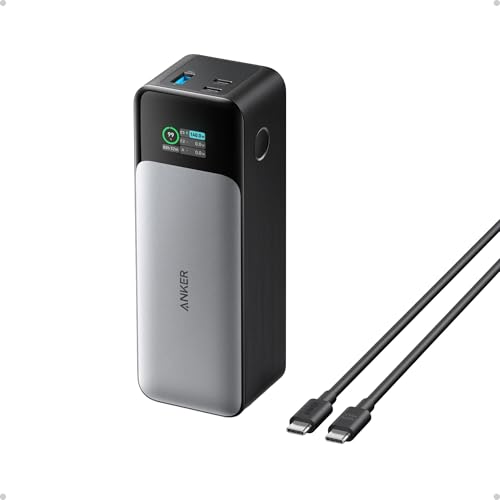
| Spec | Anker 737 Power Bank |
|---|---|
| Model | A1289 / PowerCore 24K |
| Capacity | 24,000mAh (~86.4Wh) |
| Max single-port output | Up to 140W |
| Total output | Up to 140W |
| Ports | 2 × USB-C + 1 × USB-A |
| Max input | Up to 140W through USB-C |
| Display | Smart digital display |
| Weight | About 1.3 lb (Anker pages currently list roughly 607–630g) |
| Size | About 6.13 × 2.15 × 1.95 in |
| Best fit | One high-power USB-C laptop |
Maximum charging speed depends on the receiving device, USB-PD profile, cable, temperature, battery state, and the number of connected devices.
03 / Product details
Most portable chargers are primarily built around phones, tablets, or emergency backup use. The Anker 737 is aimed at a different question:
Can a portable battery provide enough USB-C power to be genuinely useful with a laptop?
That is where the 737 makes its case. Its USB-C ports support up to 140W output with compatible hardware, so it can serve laptops that would be poorly matched to a typical 20W, 30W, or even some 65W phone-oriented power banks.
The point is not simply getting more phone recharges. It is having a battery that can keep a laptop useful when a wall outlet is not available.
04 / Product details
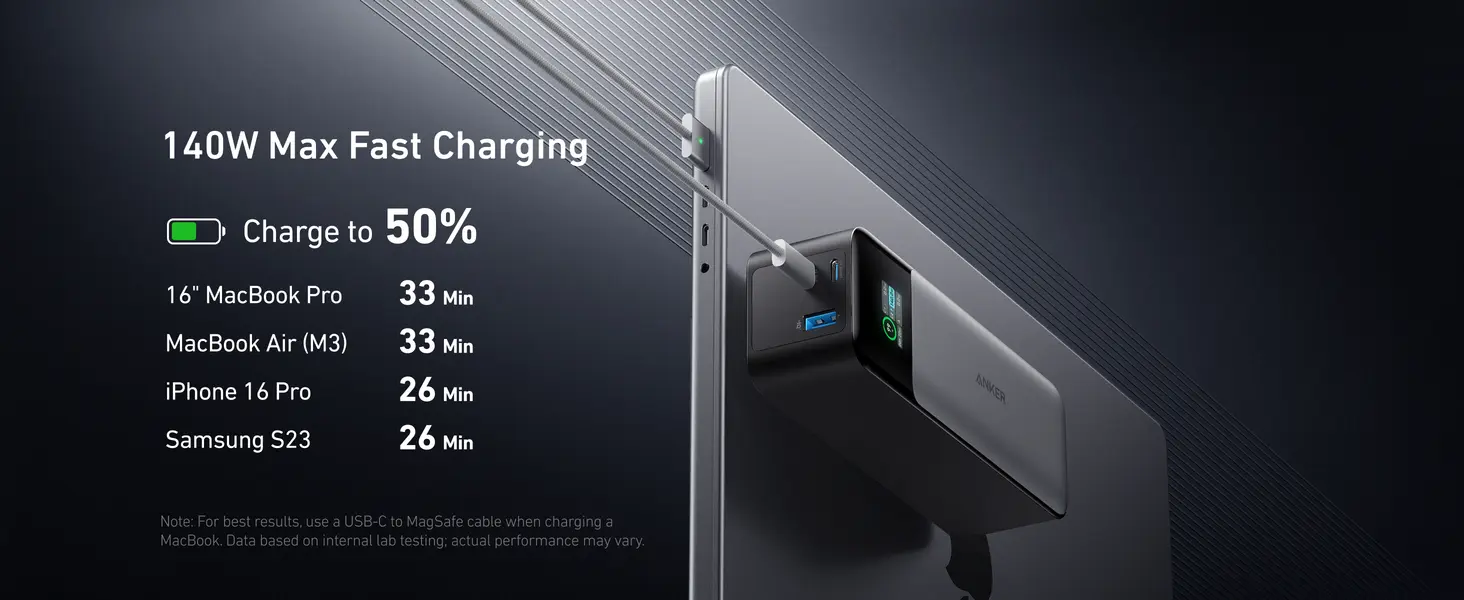
The 737 does not force 140W into every device. Your laptop decides how much power it can accept.
| Laptop charging requirement | What the 737’s 140W ceiling means |
|---|---|
| Around 45W | Most of the extra output capability goes unused |
| Around 65W | Plenty of headroom, but a smaller bank may be easier to carry |
| Around 100W | Useful headroom for a more demanding laptop |
| 140W-compatible USB-C PD 3.1 device | Where the 737 makes its strongest performance case |
Anker notes that reaching the full 140W output requires a compatible device and a cable that supports the necessary USB Power Delivery profile.
So if your laptop accepts only 65W, buying the 737 will not make it charge at 140W. The benefit comes from matching the power bank to a device that can actually use the extra output.
05 / Product details
Based on its rated output and port configuration, the 737 fits a laptop-first setup better than a typical phone power bank.
It makes particular sense for:
For phones, earbuds, or e-readers, the 737 is more capability than most people need. For a laptop, that extra capability can be the entire reason to choose it.
06 / Product details
The display is one of the more useful parts of the 737’s design. Instead of showing only a few battery dots, it provides more detailed charging information, including battery status and real-time power behavior.
That matters more on a laptop-oriented power bank than on a small phone charger. With higher-power USB-C charging, it is useful to see whether the battery is actually delivering or receiving the amount of power you expect.
Why it helps:
This is not necessary for everyone, but it is more than a cosmetic feature.
07 / Product details
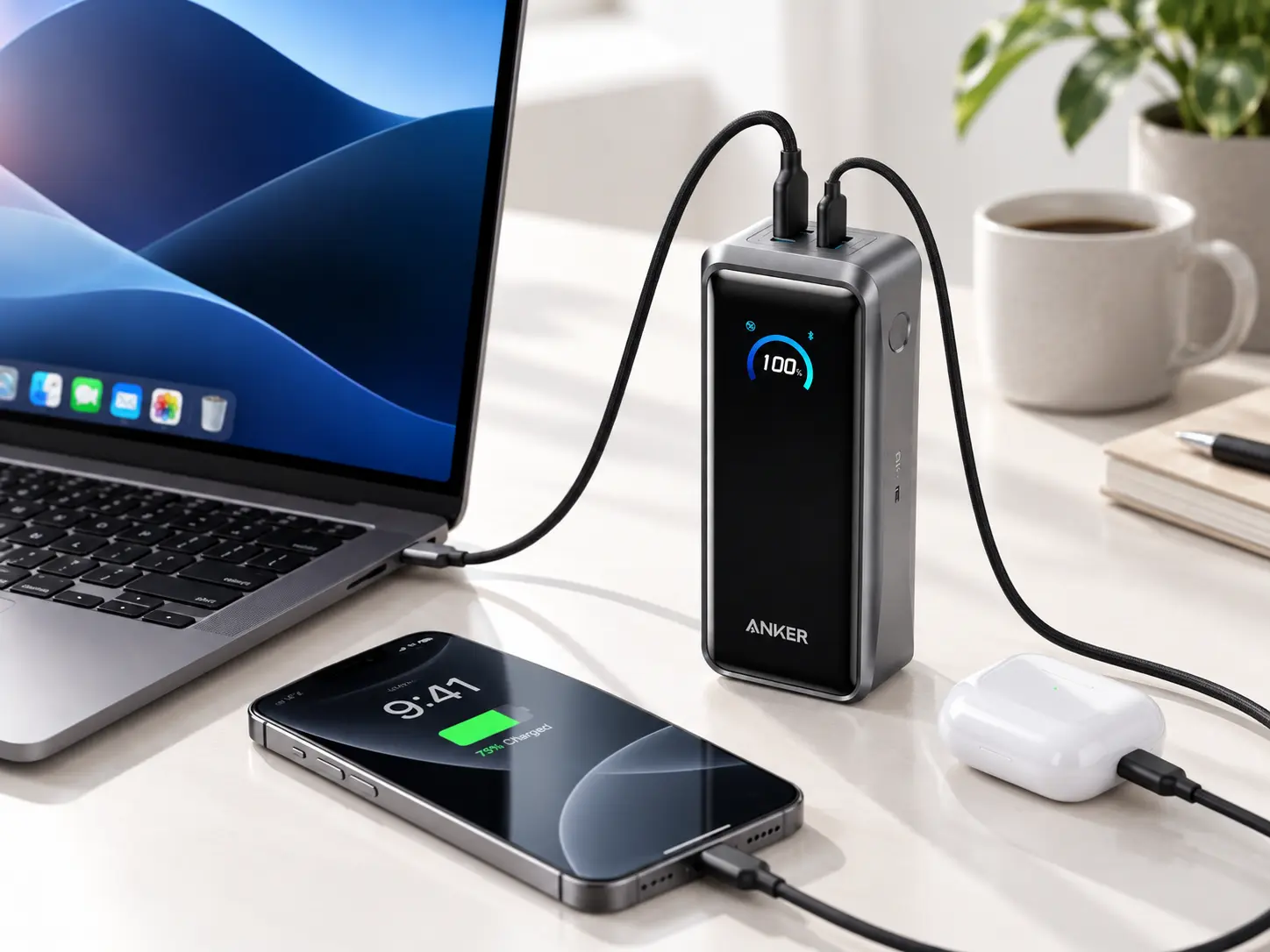
The Anker 737 has two USB-C ports and one USB-A port, so it can charge multiple devices. But the 140W figure is also the total-output ceiling.
That means connecting two or three devices does not give each USB-C port 140W at the same time. The available power is shared according to the device mix and charging negotiation.
This distinction matters when comparing the 737 with newer multi-device power banks. If your priority is one high-power laptop, the 737 makes sense. If your priority is two high-power laptops or other demanding USB-C devices simultaneously, a higher-total-output model such as the Anker Prime 26K 300W is built for a different job.
For a broader comparison, see Best Laptop Power Banks for Work & Travel in 2026.
08 / Product details
The easiest downside to understand is weight.
Anker’s current pages are not perfectly consistent on the exact figure, listing roughly 607–630g, but either way this is a substantial battery.
Pocketable? Not realistically for most people.
Easy to put in a backpack? Yes.
Will you notice the weight? Definitely.
The 737 is compact for the amount of power it can deliver, but it should not be confused with a lightweight everyday charger.
09 / Product details
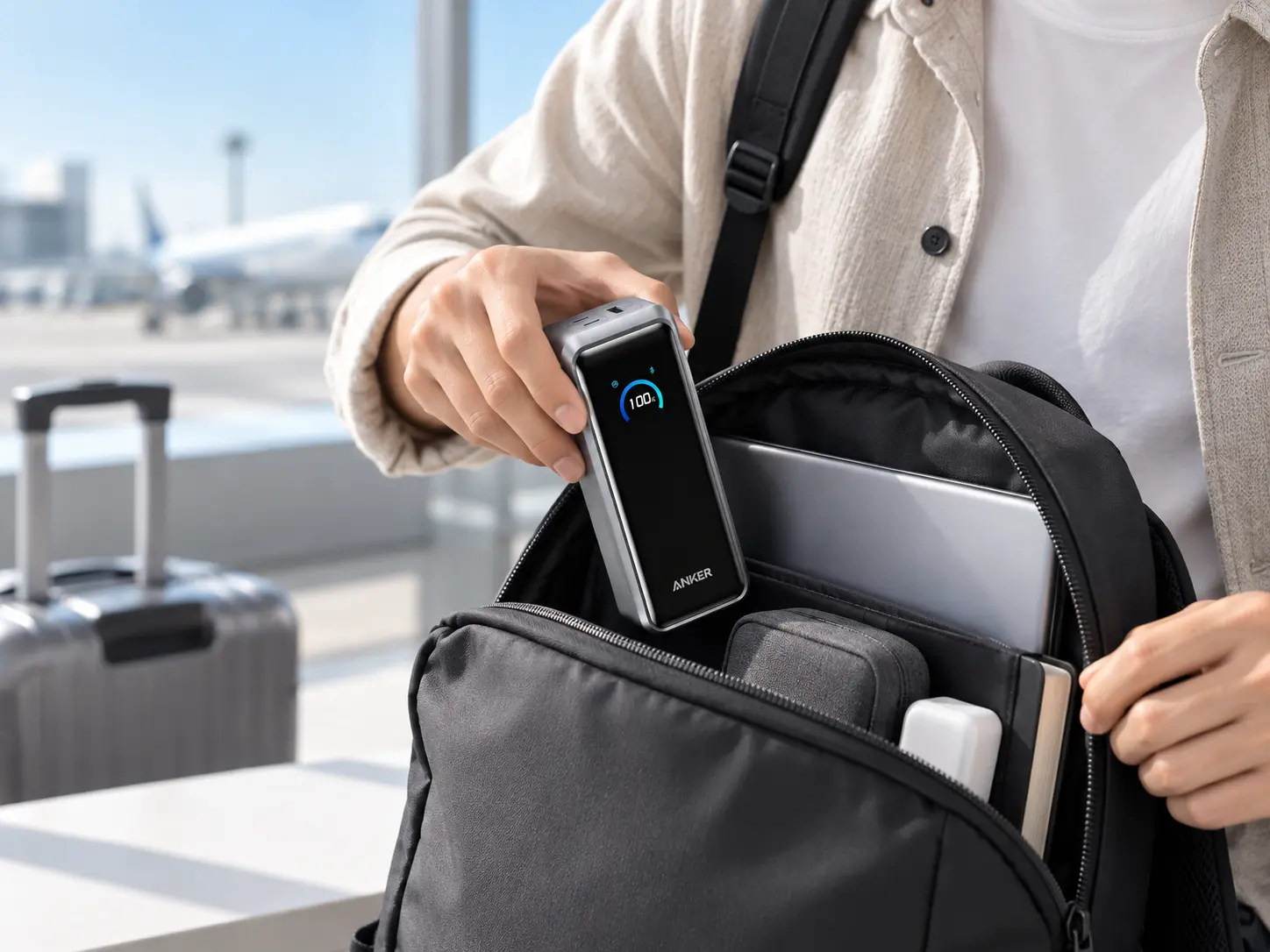
The 24,000mAh battery is rated at about 86.4Wh, which keeps it below the FAA’s standard 100Wh threshold for rechargeable lithium batteries carried by passengers in the United States.
Under current FAA guidance, spare lithium batteries — including power banks — must be carried in cabin baggage rather than checked baggage. Airlines may apply stricter rules, so checking the carrier’s current policy before travel is still sensible.
That makes the 737 useful for laptop-heavy travel days, but the weight remains part of the decision. It is travel-friendly in power and capacity, not in the sense of being ultralight.
10 / Decision support
Across the Amazon review pool we examined, positive themes repeatedly include:
Owners commonly value the amount of power available for laptops and larger devices.
The screen is frequently treated as useful rather than gimmicky, especially for checking output and remaining charge.
Many positive reviews describe the 737 as a practical battery for laptops, travel, and long periods away from wall outlets.
The build, screen, and overall presentation generally support its premium positioning.
11 / Decision support
At roughly 1.3 pounds, the 737 is substantial for a portable battery.
Many users can meet their laptop-charging needs with a lighter 65W or 100W power bank for less money.
The low-star review pool contains recurring reports of premature failure, battery degradation, units that stop charging, and problems appearing after months or years of use.
Some owners report unusually low output, charging irregularities, or behavior that improves only after a reset or reconnect.
These reports do not establish that every unit has the same problem. Overall owner sentiment remains strongly positive. But the recurrence matters because the 737 is a premium-priced product rather than a disposable backup battery.
12 / Decision support
The negative-review evidence is not strong enough to label the Anker 737 broadly unreliable. The product has a large positive review base, and many owners report long-term satisfaction.
However, the negative pool is not random noise either. Repeated themes include:
The most balanced conclusion is:
Overall satisfaction is strong, but long-term reliability is the most important recurring concern in the negative review pool.
That trade-off deserves more weight here than isolated complaints about theoretical capacity calculations, because several capacity complaints use test methods that do not cleanly account for voltage conversion and normal energy loss.
13 / Decision support
14 / Decision support
The 737 is not the only sensible answer.
The INIU P63 25K / 100W gives up some peak output but is much lighter and more value-focused.
The Anker Laptop Power Bank 25K / 165W prioritizes cable convenience and multi-device use, although its maximum output to one device is lower than the 737’s.
The Anker Prime 26K / 300W is designed for users who need to power two demanding USB-C devices at the same time, but it costs substantially more.
See the full decision guide: Best Laptop Power Banks for Work & Travel in 2026.
15 / Decision support
The Anker 737 makes its strongest case for users who need high single-port USB-C output from a portable battery.
Its 140W capability, 24,000mAh capacity, useful display, and laptop-focused design make it meaningfully different from basic phone-oriented power banks.
But those strengths come with real costs: it is heavy, premium-priced, and the negative-review pool raises legitimate questions about long-term battery and charging reliability.
If your laptop can genuinely use the extra power, the 737 remains a compelling fit. If your laptop only needs 65W–100W, a lighter and cheaper power bank may be the smarter choice.
Bottom line: choose the Anker 737 for high-output single-laptop charging, not because 140W is automatically better for everyone.
16 / Decision support